
Ryan Delaney
Chief Experience Officer · Krative architect · Sydney
A NEW CATEGORY · BUILT FOR COMMERCE · BUILT WITH SHOPIFY
Data gives you insight. Insight drives action. Action delivers assets. A loop, not a handoff. AI pilots are over. The brands winning the next decade are the ones already in deployment — with a data foundation that an AI agent can actually reason on. We built that foundation for commerce, on Shopify, with Google. Now it runs in private beta inside a growing list of ANZ retailers.
Every retailer has more commerce data than they can act on. Shopify, Meta, Google, TikTok, Pinterest, Klaviyo, GA4. All of it disconnected from the creative work that's meant to respond to it.
For fifteen years, that gap has been bridged by people. Analysts who pull the data. Strategists who write the brief. Designers who make the asset. Producers who ship it. By the time the asset goes live, the insight is two weeks old and the moment has passed.
We spent the better part of last year on the part most teams skip — the data governance layer underneath. A single, trustworthy semantic foundation that an AI agent can actually reason on. Once that exists, the loop closes itself. Data surfaces an insight. The insight triggers a creative brief grounded in your brand. The asset gets generated, approved by a human, and shipped — in minutes, not weeks.
That's Generative Analytics. It's a category, not a feature.
How we see it
Ryan Delaney
Chief Experience Officer
Generative Analytics is the closed loop between commerce data and commerce creative.
It's not BI. BI tells you what happened. It's not generative AI. Generative AI makes assets without context. It's not marketing automation. Automation triggers on rules, not insight.
Generative Analytics is the layer where all three meet. Governed data underneath. An AI agent in the middle reasoning on what the data is saying. Generative creative on top, responding to what the agent surfaces. A human in the loop approving the direction. A measurement layer feeding the next cycle.
Commerce, media, customer and store signals blended into one governed semantic layer. PROAS, margin, customer lifetime value, profit by SKU by location — defined once, trusted everywhere. Built on Looker. Sits on top of your existing stack, doesn't replace it.
An AI agent watches the data continuously. Not for trends. Not for spikes. For profit opportunities and profit risks. Creative fatigue. PROAS decline by city. Untapped SKUs running organically with no media behind them. The agent surfaces what's worth acting on. Most reports are noise. This is signal.
The surfaced insight triggers a brief, grounded in your brand config — tone, photography style, market defensibility, and the competitors you won't be confused with. The system generates assets. Product photography. Video. Every aspect ratio. Every channel. Hyper-local variants tuned to keyword performance by city.
A human approves the direction. The campaign ships. Three days later it's measured. The data layer absorbs the result. The next cycle starts richer than the last. The system gets better the longer you run it.
↵ Measurement feeds the next cycle
“This isn't future-state. It's running today in private beta inside our ANZ Shopify client base.”
Define once. Trust everywhere.
Most attempts at commerce AI fail at the same step. The data underneath isn't governed.
Three platforms tell you three different numbers. None of them are wrong. None of them agree. If you point an AI agent at that, it doesn't get smarter — it confidently produces output grounded in a number nobody trusts.
The work that makes Generative Analytics possible isn't the AI. It's the layer underneath the AI. A semantic foundation where every metric is defined once and trusted everywhere. We spent the better part of last year building that layer. It's what Ryan calls "Define Once, Trust Everywhere." It's the substrate. Krative is the application on top.
“"AI doesn't fix the data discrepancies. It compounds them. The conflicting data point of view is what gets you the wild suggestions and the hallucinations. Get the data right first, then the AI can no longer confidently hallucinate. We start with governed data first." — Paul Pritchard, Group CEO "Data governance should be for everyone. Most of our merchants are small teams — an E-commerce manager, a couple of merchandisers, a marketing team. We're on a mission to take governance away from the enterprise layers and bring it down to the SME level. Make it accessible for everyone." — Paul Pritchard”
Krative is the Generative Analytics product. Shopify-exclusive. Private beta. Debuted on stage at Google Cloud Next '26 in Vegas, alongside Google's Looker team.
Shopify is the data foundation. The data surface that Shopify exposes — products, orders, returns, COGS, customers, store inventory — is the most workable starting point in commerce for an agent to reason on. Google Cloud provides the BigQuery and Vertex AI infrastructure underneath the Looker semantic layer. Krative is the application layer on top.
It pulls Shopify, Meta, Google, TikTok, Pinterest, Klaviyo and GA4 through a governed Looker semantic layer. The agent watches for creative fatigue and profit opportunity. When something fires, it generates the creative response — product photography, video, every aspect ratio, location-personalised, brand-consistent — and recommends where to activate next.
Overdose point of view
The brands moving to Shopify are usually solving for one thing: a better commerce platform. Shopify is the answer. But the bigger problem most of them carry into the migration is the one underneath the platform — the data infrastructure. Six platforms that don't agree. Three teams that each trust their own dashboard. No single source of truth for an AI agent to reason on.
Krative solves both at once. The migration to Shopify gives you the platform. The Looker semantic layer underneath gives you the governed data foundation. Optimisation and trading become the priority, not migration.
“"Where we're winning is we get merchants up and running quickly. Time to value is really key. Then we consolidate their data into a usable space that drives more insight into the business. Optimisation and trading becomes their core priority, not just migration." — Paul Pritchard, Group CEO”
The people behind the product
Chief Experience Officer · Krative architect · Sydney
Looker Program Lead · Data foundations

Group CEO · Generative Analytics positioning · Sydney

Chief Technical Officer · Platform & infrastructure

Chief Commercial Officer · Commercial framing · Auckland
Plus the OD data engineering team, the creative production studio, and an extended bench across paid media, lifecycle and CRM.
Private beta
Krative is in private beta for Shopify Plus merchants. We're onboarding a small number of brands each month. The criteria is loose — you're on Shopify Plus, you have enough creative volume that fatigue is a real cost, and you have appetite to run a closed-loop AI system as a partner, not a vendor.
The conversation starts with a thirty-minute walkthrough with Ryan and the data team. If it's a fit, we onboard you onto the data layer in three to six weeks, then turn the creative loop on.
A short read for CMOs, Heads of Digital and CFOs evaluating commerce AI in 2026. What Generative Analytics is, what it isn't, what the data foundation needs to look like before AI is worth turning on, and the commercial questions to ask any agency or vendor pitching you on it. Written by Ryan Delaney and the OD data team. Free.
Perspectives from the people we work with.
“Their data and analytics capability is the best we have experienced, and their approach is candid with the value of various key metrics – helping us to find strategies to improve key outcomes rather than using vanity metrics to justify the status quo. We have exceptional insight into our marketing spend and how effective it is which includes direct customer feedback to ensure we invest in the right channels.”
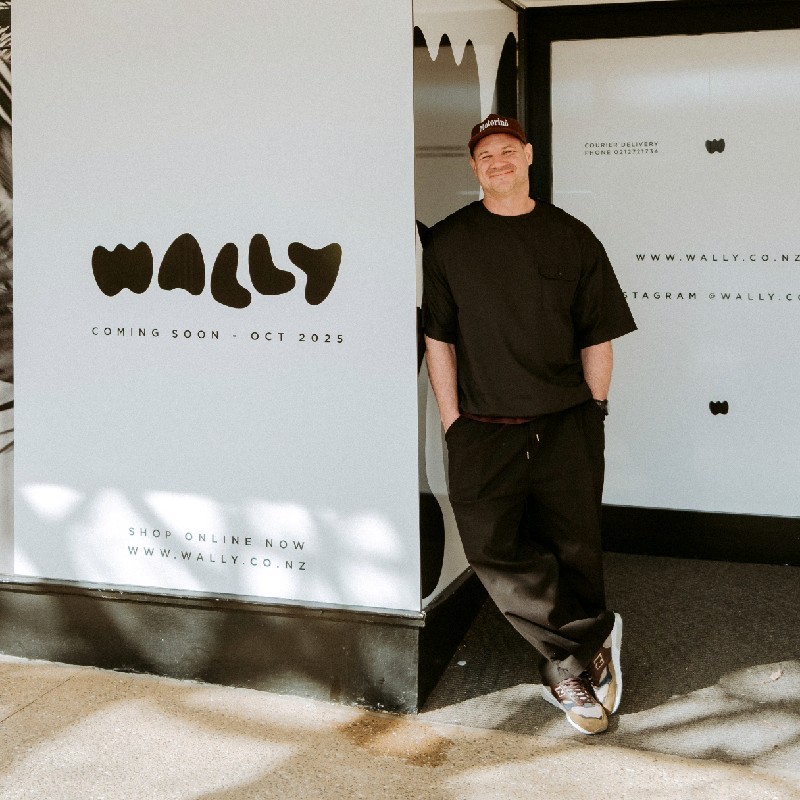
Dave Malcolm,
General Manager

“The unique relationship between the organic and paid search team at Overdose has played a key part in our success and growth over the past 6 months. We are consistently impressed by the level of depth and thought put into the crossover of strategies.”

Prue Krook,
Digital Marketing Manager