PLATFORMS · COMMERCETOOLS
commercetools is a commitment to owning your own architecture.

You get a commerce engine and nothing else, which is the entire point and the entire risk. It rewards groups with engineering capacity and it punishes the ones who bought the architecture diagram.
Our commercetools work








How we see it
Composable has stopped being the experiment
When APG & Co went live on commercetools with commercetools Frontend, it was among the first Australian implementations of many of these MACH patterns, and a real share of the work was localising a stack nobody here had run in production. That phase is finished. The patterns have settled and the interesting question moved from whether composable works to what it is actually for.
The answer that has held up is architectural ownership at group scale. We built Cargo Crew to trade B2B, B2B2C and direct to consumer across more than 25 websites on one commercetools platform, with a storefront configurator that let their own team launch a new client portal, carrying its own pricing and its own access rules, without booking developer time. That is not a feature anyone sells. It is a consequence of owning the architecture.
The second shift is that the commerce engine stopped stopping at the website. Jaycar introduced commercetools InStore through a world-first implementation, piloted at selected outlets within its network of more than 130 stores in Australia and New Zealand. The solution connects online and in-store shopping, so a cart started at home can be finished by an associate on the shop floor and inventory is one number in both places.
Antidote, our commercetools accelerator
Composable programmes rarely come unstuck on the commerce engine. They come unstuck on the twenty things around it, because every one of those decisions is now yours to make and yours to integrate. Antidote is our accelerator for that surface, so a build starts from a working composable architecture instead of an empty commercetools project. Jaycar and Cargo Crew were both built on it. On Jaycar it carried the commerce layer while Alokai handled the frontend, Contentstack the content, Algolia the search and Adyen the payments, and the pace that bought is the part their CTO chose to talk about: ratings, reviews and loyalty management added on top of a brand-new in-store commerce engine in seven weeks. Speed on a composable build is not a bonus. It is the business case, because the reason a group goes composable in the first place is to stop waiting months for changes that ought to take days.
What we deliver
When composable is the wrong answer
We are partnered across all four enterprise commerce platforms, and commercetools is the one where the fit test matters most.
The platform assumes someone on your side owns the architecture. Without engineering leadership internally, every architectural decision becomes an outsourced decision permanently, and the flexibility you paid for turns into a running cost. That is a fit problem rather than a vendor problem, and it does not improve with time.
Scale decides the rest. A single brand in a single market with a conventional catalogue will get live on Shopify Plus in a fraction of the time and spend the difference on trading. If your business model fits inside a SaaS platform's feature set, composable freedom is freedom you will never spend.
commercetools is right where several brands or markets have to trade differently on shared infrastructure, where the frontend is a competitive asset you refuse to rent, or where the engine has to run stores and online as one system rather than two that reconcile overnight.
Proof
Proof
- CommercetoolsDataJaycar InStoreJaycar connected online and in-store commerce through commercetools InStore, giving associates access to product, inventory and customer information during conversations on the shop floor.
- CommercetoolsDevelopmentCargo CrewA composable commerce platform for Cargo Crew, connecting direct retail, business accounts and employee uniform portals with customer-specific ranges, pricing and product customisation.
- CommercetoolsUX/UI & CROSABAA headless commerce experience for SABA, connecting commercetools and its frontend platform with Comestri and Omneo as part of APG & Co.'s digital vision.
- CommercetoolsUX/UI & CROSportscraftA headless commerce build for Sportscraft, coordinating payment, search and personalisation integrations through commercetools Frontend as part of APG & Co.'s wider digital programme.




On the record.
Perspectives from the people we work with.

“We’re embracing a truly unified retail strategy. Rather than doing what we did 10 years ago, which was to try to glue together and integrate disparate systems, we're building things in a composable way and getting the best pieces we need. Now, with commercetools Composable Commerce for B2C and InStore, we launched an in-store commerce engine and added ratings, reviews and loyalty management in just 7 weeks.”

Graeme Faulkner,
Chief Technology Officer

“Our new tech platform showcases our quality, design and style, whilst delivering the ultimate user experience... It was collaboration at its finest, with some of the most intelligent, creative and talented people coming together to make magic happen.”
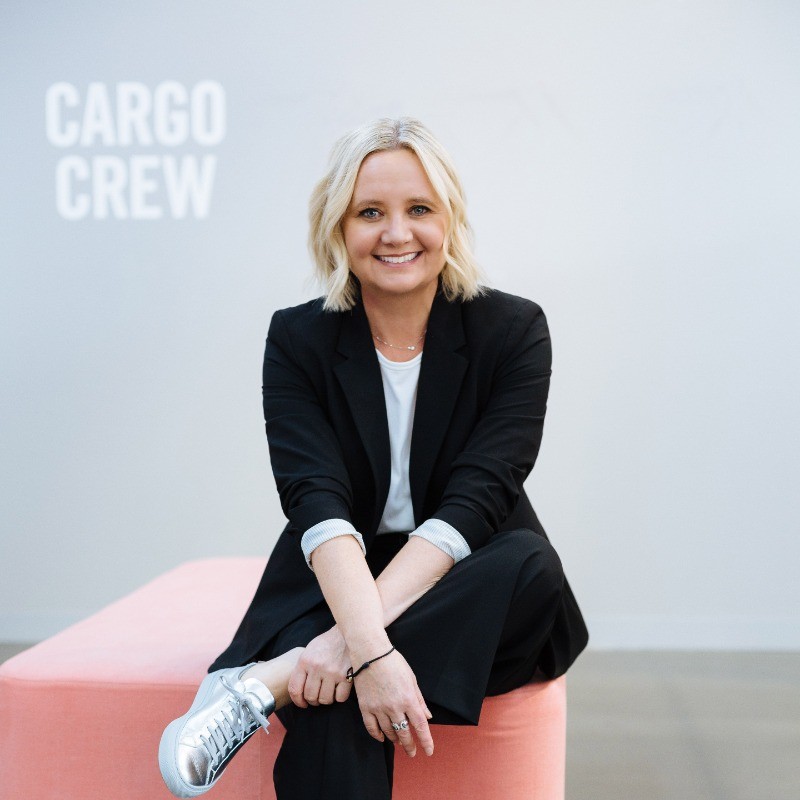
Felicity Rodgers,
Founder

Ongoing optimisation
Keep improving after launch.
After launch, the work shifts to improving what customers experience and how the business trades. We bring development, search, marketing and measurement together around what matters next.
Platform assessment
The composable feasibility assessment
The questions worth answering before you commit are barely about commercetools. They are about your team, your roadmap, and who owns the architecture in two years when the people who chose it have moved on.
We work through them with you, then score composable against the two closest monolithic alternatives for your business, sized on licence, build effort and the engineering capacity each one assumes you have. If the honest answer is that you should not go composable, that is the answer you get, and it costs far less to hear now than eighteen months in.
The composable feasibility assessment