UX becomes a conversation
Customers will describe exactly what they need, like a jacket for a winter hike on Mount Cook. Your site will respond with an experience built around that request, personal to them and still unmistakably your brand.
UX/UI

Design backed by data. Felt by customers. Every decision starts with data and business challenges. We design the part data can't: the feeling that moves someone from browsing to buying. Research, journey design, art direction and interface design work as one team, with engineering alongside to carry the decisions through to launch.
For years, designers have had to weigh what they could imagine against what a team could realistically build.
AI is changing that equation. We can explore and prototype more ambitious ideas, while better tracking and faster analysis give us a clearer picture of what customers actually need. That combination gives us more freedom to rethink the journey, and better evidence for deciding which ideas are worth bringing to life.
Customers will describe exactly what they need, like a jacket for a winter hike on Mount Cook. Your site will respond with an experience built around that request, personal to them and still unmistakably your brand.
LLMs handle the early discovery, so the brand experience is the one part of the journey left to win. In 2027, the brands that invest in it will build the emotional connection that brings customers back to buy again and again.
When every customer gets a different experience, there's no single page to design. Components, rules and brand become the instructions that AI builds from, so the quality of your design system sets the quality of every experience.
Research starts with what customers do and ends with why. Custom event tracking and behavioural analysis show what people engage with and where they stall. Surveys, interviews and testing explain what holds them back. The output is a clear view of what the experience needs to say, show and do, and in what order.
Business challenges and kick-off
Custom event tracking and data-layer specification
Behavioural data analysis, including heatmaps and session replay
Customer journey mapping
Customer surveys
Customer interviews
Voice-of-customer analysis: reviews, support tickets and on-site search
User testing
Research and inspiration turn into concepts: the look and feel, the content, and the features that will lift conversion. Wireframes and interactive concepts go in front of your team and the merchants who know the range, so each idea gets sharper before it gets expensive.
Brand and creative elevation
Content strategy
Solutions and features
Competitor and inspiration review
Wireframes and interactive concepts
Personalisation and logged-in states
Conversational and AI-assisted journey concepts
Prioritised roadmap
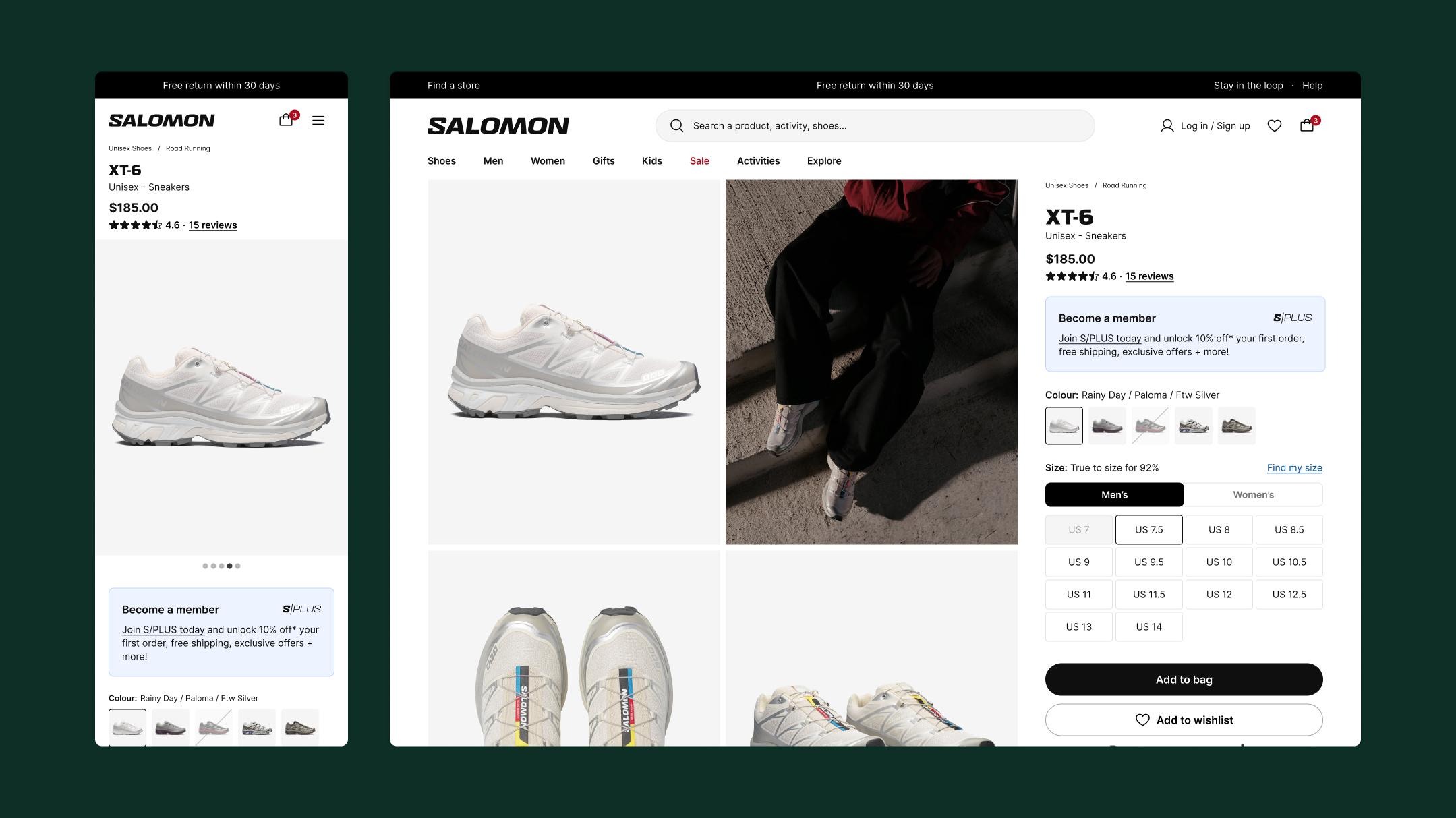
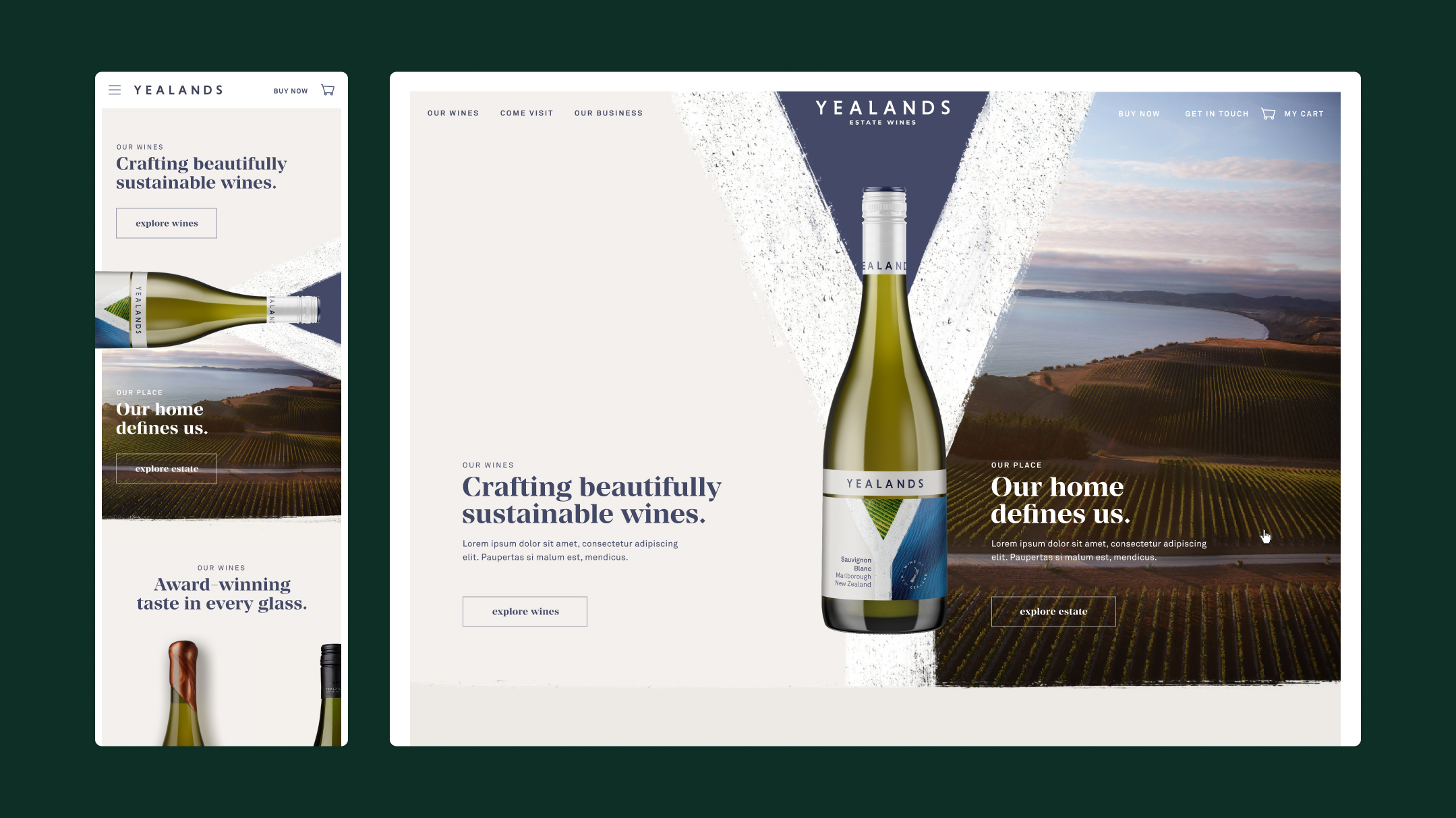
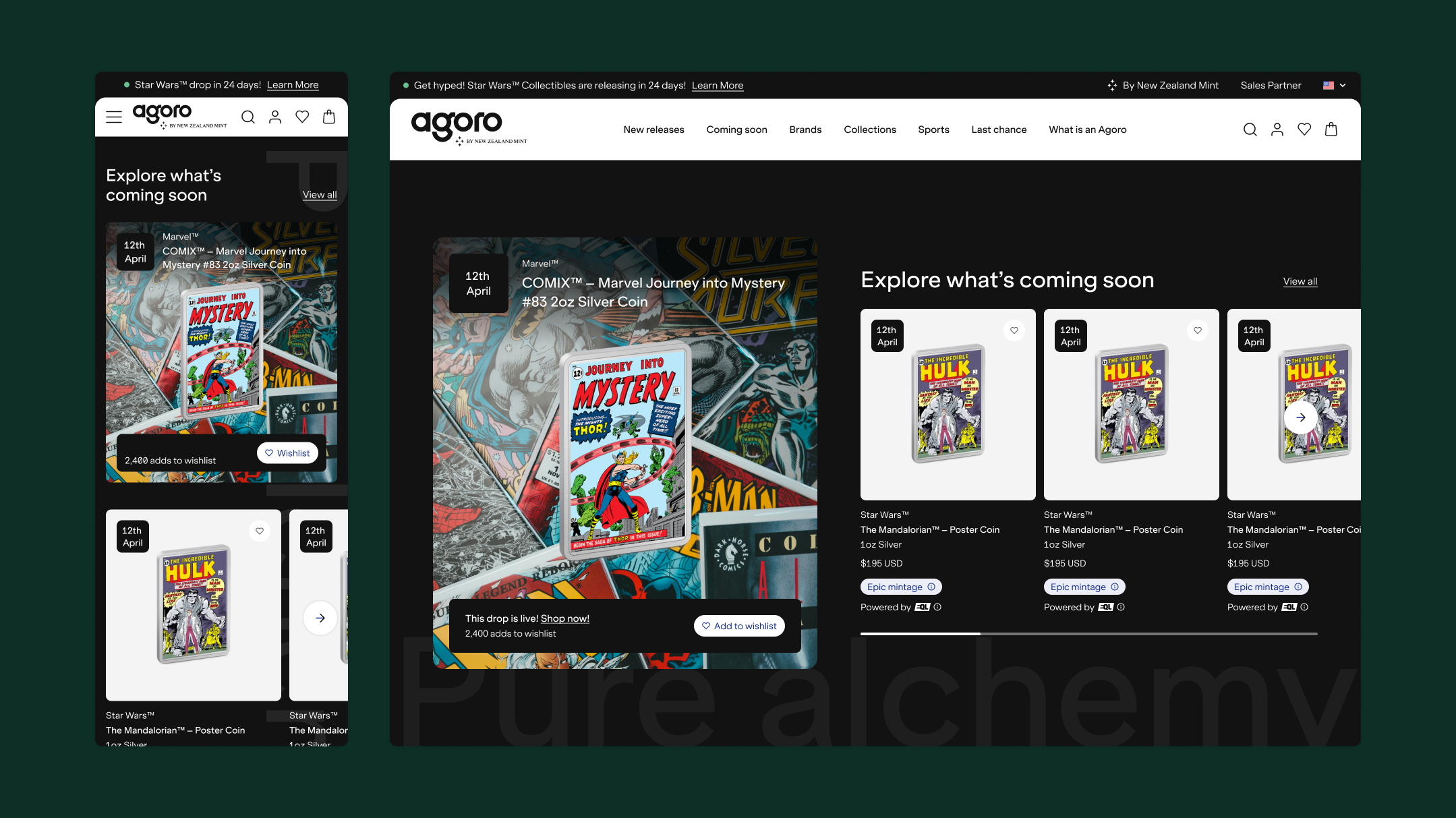
High-fidelity designs built in an atomic design system that reflects your platform, whether that's Shopify or React for headless. Every component is consistent and ready to build. AI speeds up prototyping, so you can click through the look, feel and behaviour before anything is built. Handover includes annotations and content, so developers build what was designed.
Figma design system
Component based designs
Platform-specific design: Shopify, BigCommerce, Adobe Commerce, commercetools or headless
Live coded prototypes
Annotated handover and content spreadsheet
Accessibility built in
Design QA through build

Our Approach
We start with your business: the challenges you face, what the brand stands for and how you'll know the work succeeded. Then we apply the research. Custom tracking shows what customers engage with and what moves them towards add to cart. Surveys and interviews ask why: what makes them anxious, what draws them to the brand and which features they want. If shoppers who watch your product video add to cart more often but few ever find it, we know what to test.

Our Approach
Research becomes solutions in working sessions with your team, not at a big reveal. Together we shape the features, content and look and feel that answer each challenge, and push the brand further through the UI. Merchants and stakeholders can push on early concepts while changes are easy, so the direction that comes out is one everyone has had a hand in.

Our Approach
High-fidelity designs built in an atomic design system that reflects your platform, so every component is consistent and ready to build. AI speeds up prototyping, so you can click through the look, feel and behaviour before anything is built. Feedback lands on something that works, not on a still image.
01 / 03
Working together
Your merchants, marketers and developers shape the work from the first workshop. You get fortnightly work-in-progress meetings, monthly reporting, quarterly business reviews and annual planning, so there is always a clear view of what has shipped and what comes next.
A defined scope for a redesign or new journey, from research through to annotated handover to your developers.
Flexible capacity that scales with trading peaks, campaigns and your roadmap.
Custom event tracking goes in with the design, so you can see what customers engage with, where they drop out and what works well on the new site.
Once the site is live, our CRO team takes the loop on: optimise the experience, test changes against real behaviour, understand what moved the numbers, and scale what works.
Where we can help
We can work from customer research and journey design through to art direction, interface design, prototypes and handover. The scope depends on the decisions your team needs to make and what engineering will need to build the result.
We start with the brief, customer tasks and the evidence available. That may include behaviour on the current site, research and conversations with your team. From there, we agree the journeys and decisions that matter most before polishing screens.
Yes. The design has to account for the platform, its integrations and the people who will maintain the site. We involve engineering while the work is being shaped, so responsive behaviour, content needs and technical constraints are considered before handover.
The work can be scoped around a particular journey, a replatform or a broader change to the brand experience. We would first define the problem, the research needed and the deliverables, then agree what belongs in the project.
We use research and prototypes to test important assumptions where the project scope allows it. After launch, ongoing research and experimentation can continue through a CRO programme with its own priorities and measurement plan.
Proof is in the pudding we say. We love our clients, and they love us back.
“Overdose took the time to understand our brand and customers’ needs, which shows in the amazing user experience we have created. Ultimately, we’ve created a beautiful space to showcase our brand, while providing a fun and functional platform that’s translating into happy customers.”

Josh Cragg,
Group Digital Manager